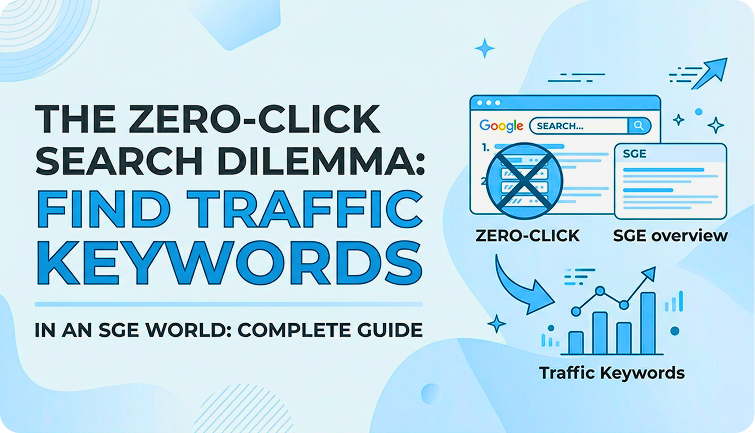
In 2026, people don’t click anymore. They type a question into Google and see an answer right there. No scrolling, no clicking, nothing. Somewhere around 60 to 65 percent of searches these days just stop at the results page. That’s a big change from the old days, when if you searched for something, you probably clicked a link and visited a site. For people working on SEO and keyword strategy, it’s challenging to appear in zero-click search. They are worried: How do you even find keywords that still bring visitors? How do you do keyword research for SEO in a world where AI and SGE (Search Generative Experience) try to give everything away at once?

In this blog, you will learn how to find SEO keywords that still bring real visitors, even when Google shows answers without clicks.

Turn Zero-Click Searches Into Real Traffic
Get a custom keyword strategy built for the SGE era.
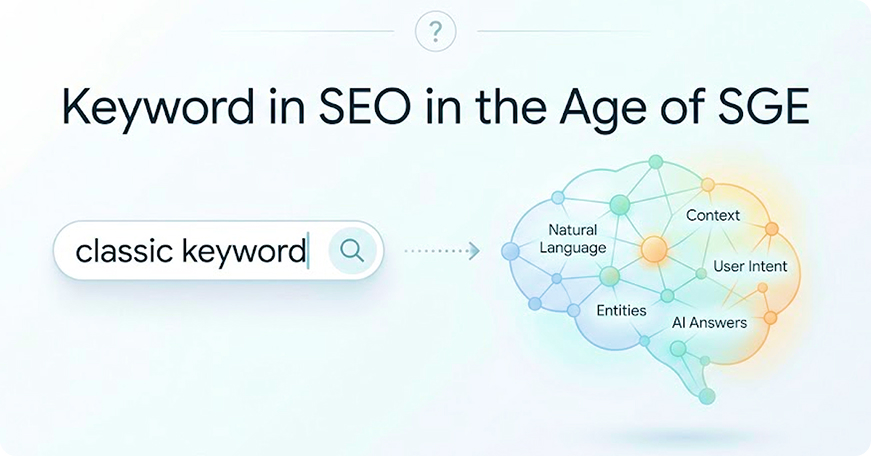
What Is a Keyword in SEO in the Age of SGE?
A keyword is just a word or phrase people type into search engines, but it’s more than that. It’s how Google figures out which content matches what someone wants. In the past, you could rank for “best running shoes,” and people would click and read your page. Now, with AI overviews, sometimes Google just shows a paragraph or a comparison chart. People get the info they want without clicking.
Take, for example, someone searching “how to do keyword research for SEO.” Before SGE, they’d find a list of articles, maybe click through a few. Now, they might just see a mini-guide in the snippet and move on. It doesn’t mean the keyword is useless, just that its purpose is different. It’s why keyword analysis for SEO now needs to think about clicks, not just rankings.
Why Traditional SEO Keyword Research Is No Longer Enough
Before all this AI stuff, it was easy. You found SEO keywords with good volume, checked how hard it was to rank, wrote a post, and watched the visitors come in. Ranking was like a promise that traffic would follow. It mostly worked.
> Why High-Volume Informational Keywords Are Losing Clicks
Now, Google sometimes just shows the answer right there. People type “find keywords SEO,” and they see a short answer or table, and then that’s it. No click. Those high-volume, easy-to-rank keywords aren’t bringing visitors like before. That’s why anyone doing SEO and keyword work has to rethink what really matters.
> Why Click Potential Matters More Than Volume
Some keywords just never get clicks because the answer is too simple. Other ones, maybe more complex or niche, make people curious enough to click. Keyword analysis for SEO now focuses on those “click-worthy” keywords. They’re worth your time because they still bring people to the site.
How to Find Keywords SEO Still Rewards in an SGE World
Finding the right keywords now is less about popularity and more about whether people actually click. By considering the following steps, you can compete in this zero-click era:
Identify Target Topic Clusters
Start with the big topics around your business, then look for related subtopics. It’s like making a little neighborhood for your content. Each article supports the other. Someone searching “SEO keyword research” might also see a related piece about “how to do keyword research for SEO.” Building clusters helps with authority, and Google likes that.
Map Keyword Intent
Next, look at why someone is searching. Are they just curious, comparing products, or are they ready to buy? You categorize keywords as informational, commercial, transactional, and complex problem-solving queries. This way, you know which ones might get a click and which ones are likely to stop at the snippet.
Check SERP Features Manually
Sometimes you just need to go and look at the results. Type the keyword in Google and see what comes up. If there’s an AI overview or featured snippet, that might lower your chance of a click. But if it’s a plain blue-link page, that’s better. Tools for keyword research SEO can help spot these automatically, but a quick manual check gives a real feel for what the user sees.
Calculate Clicks-Per-Search (CPS)
Some keywords show up a lot, but almost nobody clicks. CPS measures actual clicks per search. Focus on the ones with high CPS; those are the ones that still bring traffic. Keyword analysis for SEO helps figure that out.
Bottom-of-Funnel (BoFu) Keywords
Keywords like “Product A vs. Product B” or “pricing of Product X” still make people click. AI can’t provide every detail in one snippet, so these BoFu searches are valuable. They’re specific, have a real purpose, and usually bring people to your page.
Analyze Long-Tail Conversational Queries
Long questions like “advanced SEO for e-commerce 2026” may have lower volume, but people clicking these queries are looking for serious answers. They can’t get it from a small snippet. SEO keyword generator tools often help discover these long-tail phrases.
Add Commercial Modifiers
Adding words like pricing, comparison, vs, alternatives, pros and cons, or case study makes a keyword more likely to get clicks. “SEO keywords vs. SEO keyword research” will pull in a different kind of audience than just “SEO keywords.”
Prioritize Based on Business Value
Not all clicks are equal. Some bring leads that matter; some are just curious browsers. You just have to focus on revenue potential, alignment with products, and long-term authority growth. Your SEO and keyword choices should reflect this, not just raw search volume.
Turn Keywords Into Revenue
We align SEO with real business growth—not vanity metrics.
What structural strategies improve SGE Visibility?
Even if clicks drop, appearing in AI overviews still matters. You want Google to notice your content.
- Keep paragraphs short, 40–60 words, and use tables for comparisons. Mini-lists or little definition blocks get picked up more often.
- Add FAQPage, HowTo, or Product schema to help AI understand your content hierarchy. This helps your page show up in search results, even if no one clicks.
- Give the main answer first. Then add small examples, extra details, and your own notes. Readers and AI both like to see the main point first.
What Metrics Should You Track in the Zero-Click Era?
CTR alone isn’t enough. Look at visibility, impressions, branded search lift, and assisted conversions to track your performance.
Visibility and Impressions
Check how often your pages appear in AI Overviews. SEO keywords may rank high, but if nobody sees them, clicks don’t matter.
Branded Search Growth
Check if people look for your brand name after seeing your content. That shows awareness, even if direct clicks are low.
Assisted Conversions
Someone may see your snippet, leave, then come back via another channel to buy. Track that in GA4.
CTR by Intent Category
Divide performance by intent type. It helps you refine which keywords to focus on next.
What Are the Best Tools for Keyword Research SEO in 2026?
< Semrush Keyword Magic Tool
Filter for “None” SERP features to find plain blue-link opportunities. Very handy for click-focused keyword research.
< AnswerThePublic / Ubersuggest
Great for long-tail questions and conversational queries. They show what people really type.
< Google Trends
Spot trending topics early. Useful to jump on queries before they get filled with AI summaries.
Conclusion
Even if many people do not click on search results, you can still find keywords that bring visitors. Use long questions, specific searches, and words people really click. If you want help to pick the right SEO keywords and get more people to your site, Mindcob Digital Marketing Agency can help and make it easier to grow your traffic.
Ready to Start Generating Leads?
Whether you choose Google Ads, LinkedIn Ads, or a hybrid strategy, we’ll build campaigns that bring qualified prospects to your business.
Frequently Asked Questions
Yes, long-tail keywords are longer phrases. Fewer people search them, but the ones who click are more interested.
High-volume keywords are searched by many people. But many times, people do not click on them. Click-worthy keywords are ones people actually click and visit your site.