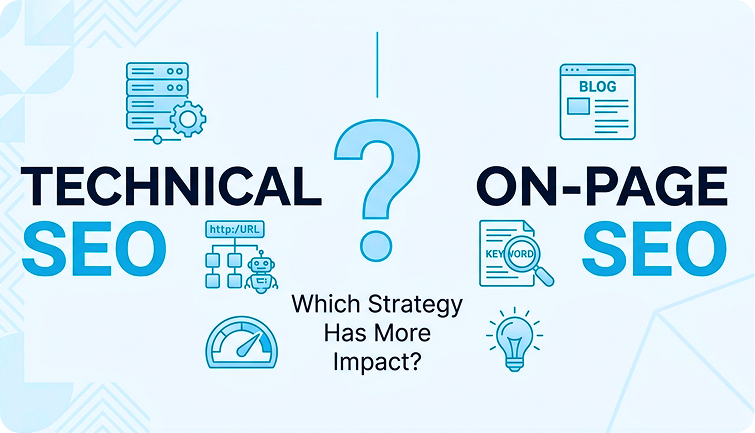
Have you ever wondered why your website does not show up on Google even when you have good content? Many people face this problem. The reason is usually SEO, but not all SEO is the same. There are two main types: technical SEO and on-page SEO. Both are important, but they do very different jobs. This blog will explain what each one does, when to use it, and how to make your site rank better so more people can find it

Your Website Not Ranking on Google?
Let us find what’s holding your site back in minutes.
Why Understanding the Difference Matters
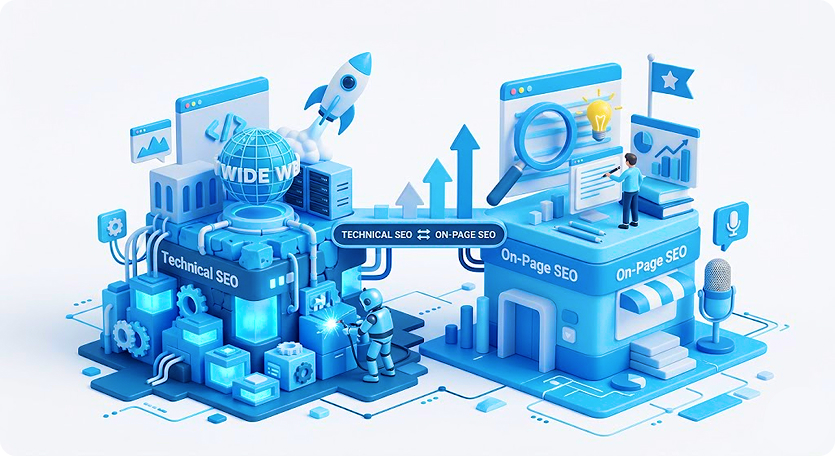
You can have a beautiful website full of great words, pictures, and stories, but if search engines can’t read it, nobody is going to find it. That’s where technical SEO comes in. It makes sure search engines can crawl and index pages. While on-page SEO makes sure your content actually matches what people are looking for.
Some people ignore the tech side because it feels boring. Others skip content improvements, thinking the site structure is enough. Both are wrong. If you start with technical SEO problems and leave thin or irrelevant content, your visitors might leave quickly. If your site is technically sound but the pages aren’t optimized, they won’t rank
Pro-tip
It usually makes sense to start with tech fixes, then polish the content
What Is Technical SEO
Technical SEO is the work done behind the scenes of a website to help Google and other search engines understand it. It is not about the words or pictures people see. It is about how the site is built and organized. If technical SEO is not done right, even good content may not show on Google.
For example, a website may have broken links, pages that load very slowly, or missing sitemaps. Google might not find these pages at all. Doing a technical SEO audit can show these problems. Tools like Google Search Console or Screaming Frog can help check the site. Using a technical SEO checklist step by step makes it easier to fix issues and get your site ready for search engines.

Key Areas of Technical SEO
> Site Speed
A page that takes ten seconds to load is like a restaurant that makes you wait long for water. People leave, and so does Google. Compressing images or enabling browser caching can help
> Mobile-Friendly Design
Most people browse on phones these days. If your site looks messy on a small screen, visitors bounce. Testing with Google’s Mobile-Friendly Tool can save headaches.
> HTTPS Security
HTTPS is a tiny padlock in the browser bar. It might feel small, but it’s important. Google considers it when ranking sites, and users trust it more.
> Crawlability
Even if you have the best content, search engines need to find it. A sitemap.xml or a well-structured robots.txt file can make sure bots don’t get lost.
> Site Structure
Simple URL paths and breadcrumbs aren’t flashy, but they matter. They help both search engines and visitors know where they are on your site.
Impact of Technical SEO
> Search Access
Technical SEO ensures that search engines can reach your pages. If links are broken or a page is hidden, it won’t rank. I’ve seen small e-commerce stores with amazing products never show up on Google just because a sitemap was missing.
> Performance
Speed, security, and mobile usability affect both users and search engines. Slow websites are like waiting in line forever. People click away. Fixing speed issues can make a big difference in bounce rates.
> SEO Foundation
Think of technical SEO as the foundation of a building. You wouldn’t decorate a house without floors and walls. Without a strong website structure, making your content better will not help much.
When Technical SEO Becomes More Important
Technical Issues
If your site has broken links, very slow pages, or errors that stop Google from reading it, you need to fix these first. Even the best content will not show up if the site has problems.
Technical Issues
If your site has broken links, very slow pages, or errors that stop Google from reading it, you need to fix these first. Even the best content will not show up if the site has problems.
Fix Technical Issues Before They Hurt Rankings
Improve speed, indexing, and visibility fast.
What Is On-Page SEO
On-page SEO supports the on-page activities of your website, such as the content people see and read on your site. It ensures that each page must satisfy the user’s intent. For example, using the right headings, meta descriptions, and internal links helps both readers and search engines understand the page. Doing on-page SEO optimization can make a huge difference even on a technically sound website.
Key Areas of On-Page SEO
> Keywords
Targeting the right keywords on a page makes it easier for people to find you. One page, one main keyword, ideally.
> Content Quality
Content quality is very important for a website. It helps a page rank better in search results. You do not always need long text. A few short paragraphs that explain the topic in a clear way can work very well.
> Meta Tags
Meta tags are small, but they matter. Page titles and meta descriptions can affect how many people click your link. When you add the main keyword, it helps both users and search engines understand the page.
> Content Structure
Good structure makes a page easy to read. Using H2 and H3 headings helps break the text into parts. Bullet points also help people scan the page quickly. It is a small thing, but it can improve user engagement.
> Internal Links
Internal links connect one page of your site to another. This helps visitors to find more relevant pages. It also helps search engines to understand how your website is organized.
> Image Optimization
Images also need some simple optimization. Adding alt text helps people understand the image, especially if they cannot see it. Smaller image file sizes also help the page load faster. Good alt text can also support on-page SEO.
Impact of On-Page SEO
> Content Relevance
On-page SEO improves how well your content matches what people are searching for. Updating articles regularly can make a noticeable difference.
> Engagement
Good structure and easy-to-read content keep visitors on the page. Short sentences, clear examples, and visuals help a lot.
> Rankings
Once a page is technically sound, on-page SEO decides if it climbs the rankings. Keywords in headings and meta tags make it easier for Google to understand the topic.
When On-Page SEO Becomes More Important
Weak Content
Pages with very little information often do not rank well. Bad formatting can also make the page hard to read. It is better to add more helpful details. Small examples can help readers understand the topic. A short FAQ section can also make the page stronger.
Search Intent
Your content should answer what people are trying to find. If someone has a question, the page should give a clear answer. Adding simple sections for common questions can help a lot. FAQs often work well because they match what many people search online.
Is Your Content Optimized to Rank?
We turn your pages into keyword-driven traffic magnets.
5 Key Differences Between Technical SEO and On-Page SEO
Focus
The main focus of technical SEO is on how the website is built. While on-page SEO has a prime focus on content quality
Accessibility
Technical SEO makes sure pages can be crawled. On-page SEO makes the content easy to understand and helpful for people.
Performance
Technical SEO helps the website load faster and work well on mobile phones. On-page SEO helps people stay on the page longer and read the content easily.
Skills
Technical SEO usually requires developer skills. On-page SEO needs good writing and some SEO knowledge.
Scope
Technical SEO affects the whole site. On-page SEO affects individual pages.
Mini-note:
Use this as a checklist when running a technical SEO audit service or updating page content.
Technical SEO vs On-Page SEO: Key Differences (Quick Comparison)
| Feature | Technical SEO | On-Page SEO |
|---|---|---|
| Focus | Site setup | Page content |
| Goal | Easy crawling | Content match |
| Examples | Speed, sitemap | Keywords, headings |
| Main Impact | Search visibility | Better rankings |
| Skill Type | Tech skills | Writing skills |
Which SEO Strategy Has More Impact?
Visibility
Technical SEO helps Google to find your webpages. If a link is broken or the sitemap is not there, Google may not see the page at all. Then the content stays hidden.
Rankings
When Google finds the page, on-page SEO helps it rank. Words you use, headings, and the meta description can help the page show higher in results.
Balanced Approach
Good results come when both are done. If you only fix the tech side and ignore the content, it will not work well. The same if you only write content and forget the tech part.
Pro-tip:
Experts at Mindcob Digital Marketing Agency often say to fix technical problems first. After that, improve the content. It is like building a house. First, the house should stand strong. Then you decorate it.
What are the common SEO Mistakes to Avoid
Technical Problems
If a site has broken links, it can hurt SEO. Slow pages are also a problem. Sometimes the site does not even have a sitemap. These small things look normal, but they can slowly damage the site’s search ranking.
Weak Optimization
A website can be fast, but that is not enough. If the content is not good, the page may still not rank well. Some pages also repeat the same keywords too much. This makes the content look forced and not natural.
Looking at Only One Part
Some people only fix the technical side. Others only write content. But search engine optimization needs both. Think about a car. If you fix the engine but ignore the tires, the car still will not run well.
Checking the Site Often
It is good to check the website again and again. A simple technical SEO checklist can help find problems. An on-page review can also show what needs to improve. Doing this every few months is a good habit for any site owner.
Conclusion
In simple words, technical SEO builds the base of a website. On-page SEO makes the pages helpful and interesting for people who visit. Both are important. You cannot ignore one of them. Small businesses and big companies often take help from experts, like Mindcob Digital Marketing Agency, to make sure everything works well together. Many small businesses and big companies get help from experts, like Mindcob Digital Marketing Agency. Experts check the site and make sure everything works together in the right way.
FAQs
Yes, but it is difficult. If the site has technical problems, Google may not read the pages properly.
It is good to check the site every few months. This helps find problems early.
On-page SEO is easier for beginners. It mostly involves writing content and using keywords.
Yes. Technical SEO helps the site load fast, while on-page SEO makes the content easy to read.
SEO usually takes a few weeks or months to show results. It depends on the changes made and the competition.