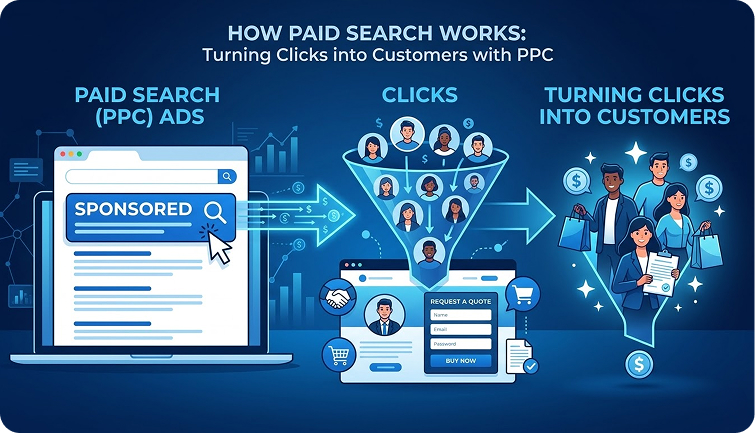
You know when you search for something on Google and the first few results say “sponsored”. That is paid search, also called PPC marketing. It means businesses pay for their ads to show. They pay only when someone clicks on the ad. PPC marketing is good because it shows ads to people who are looking for something. If someone searches “best shoes near me,” they might want to buy. Your ad can appear right there. You do not waste money on people who are not interested. This blog will help you understand PPC, how ads work, and how to make them bring real customers to your business.
What Is PPC Or Paid Search
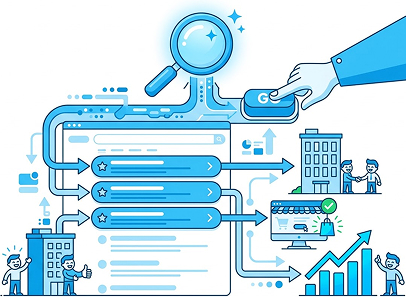
Paid search or PPC marketing is a way for businesses to show ads to people online. You pay only when someone clicks the ad. It is not the same as organic search. Organic search is like planting a garden and waiting for people to notice. Paid search is like putting up a sign in front of the garden. You get visitors faster. Businesses like PPC because it gives results quickly. You do not have to wait months to get people to visit your website.

New to PPC Marketing?
Our experts set up high-performing campaigns so you start getting traffic faster.
How Does PPC Digital Marketing Reach the Right People?
PPC digital marketing works with things like social media and emails. The good thing is you see results fast. It helps reach the right people. You can show ads based on location, device, time, and interest. You do not waste money on people who do not care. You can also check what works. If one ad does better than another, you can change it. It is like testing to see what works best. Small changes can make a big difference.
How Does PPC Marketing Actually Work?
Google Ads is the main place for PPC marketing. Ads can show on search results, YouTube, or other websites in Google’s network. Most businesses use Google because people search there when they need something. If someone types “cheap phone charger,” they want to buy one. Google helps you reach them at that moment. The following factors are involved in the working of PPC marketing:
- Keyword Bidding
- The Auction and Ad Rank
- Ad Quality and Relevance
- Cost-Per-Click (CPC)
Let’s learn each point in detail for better understanding.
Keyword Bidding
Keywords are words people type in search engines. Advertisers pick keywords that match what they sell. For example, if you sell mugs, you can pick “funny mugs” or “custom coffee mugs.” You also set how much money you are ready to pay for a click. It is called a bid. If someone clicks, you pay up to that amount.
The Auction and Ad Rank
Every time someone searches, Google runs an auction. It is fast and happens automatically. Your ad can appear based on how much you bid and how good your ad is. This score is called Ad Rank. Even if you bid high, a bad ad might not show at the top.
Ad Quality and Relevance
Google checks if your ad matches the keyword. It also checks your landing page. If the ad says “funny mugs” but the page shows plain mugs, your score is low. Higher scores can lower your cost and get better placement.
Cost-Per-Click (CPC)
You pay only when someone clicks. You do not pay just for showing the ad. Usually, you pay less than your maximum bid. For example, you bid $2, but it might cost $1.50 per click.
How Can You Turn PPC Clicks into Real Customers?
Running PPC ads is one thing and converting that clicks into real customers is the main thing. The following points show that how PPC clicks turn into real customers:
- Targeting High-Intent Searches
- Targeted Campaigns
- Actionable Landing Pages
- Ad Extensions
Now, we will discuss each point in detail.
Targeting High-Intent Searches
PPC works well when people already look for something. A search like “cheap shoes near me” shows intent. If your ad appears, they might click and buy.
Targeted Campaigns
You can choose who sees your ad. You can target by location, device, or time. For example, a coffee shop shows ads only in the morning near the shop.
Actionable Landing Pages
The page people land on should match the ad. If your ad is about “custom mugs,” the page should show those mugs and a way to buy them.
Ad Extensions
Google lets you add extra info to your ads. You can show phone numbers, links, or location. These small things help people act faster.
Want More Conversions from Your Ads?
Optimize targeting, landing pages, and ad structure to turn clicks into paying customers.
Which Platforms Can You Use for PPC Marketing?
Google Ads
Google Ads is the main place for PPC ads. Your ads can appear on Google search, YouTube, or other websites that work with Google. Many businesses like Google because people there are already looking for stuff. It’s kind of like putting your shop on a busy street. For example, if someone searches “cheap phone chargers,” your ad can show up right when they need it.
Microsoft Advertising (Bing, Yahoo, AOL)
Microsoft Advertising shows ads on Bing, Yahoo, and AOL. It’s smaller than Google, but it still brings clicks. Sometimes it costs less too. This is good if you want a smaller group of people or want to spend a bit less money. It’s like setting a shop on a quieter street, fewer people pass by, but the rent is cheaper.
What Is the Difference Between Content Marketing and PPC?
When businesses try to get people to visit their website, they usually choose between content marketing and PPC. The table below shows some of the main differences between them.
| Feature | Content Marketing | PPC |
|---|---|---|
| Results | Takes time | Fast |
| Cost | Less | High |
| Traffic | Slow | Quick |
Not Sure Which PPC Platform Is Best?
We help you choose the right platform and build campaigns that maximize your budget.
How Do You Track and Measure PPC Marketing Success?
Once your ads are running, you can’t just forget about them. You need to track what’s happening. Some people click, some people don’t, and not everyone who clicks will buy. That’s why checking the numbers is important. Some important numbers are
- click-through rate (CTR)
- cost per click (CPC)
- cost per acquisition (CPA)
- return on ad spend (ROAS)
If your CTR is low, maybe the ad is not clear. If CPA is high, maybe the landing page needs work. Watching numbers and changing ads is a big part of PPC.
What Common Mistakes Should You Avoid in PPC Marketing?
You should avoid the following common mistakes in PPC Marketing:
Keyword Targeting Mistakes
Picking the wrong keywords is easy. You might get clicks, but people don’t want to buy. For example, “mugs” is too broad. “Cute coffee mugs for gifts” works better.
Landing Page Mistakes
If you send people to a general homepage instead of the page your ad talks about, they often leave. Make sure the page matches your ad and makes it easy to act.
Tracking and Budget Mistakes
Not watching your budget or skipping tracking wastes money fast. Even small mistakes can add up. Keep checking and make small changes regularly.
Conclusion
PPC marketing shows people who already want something. You pay only for clicks. With targeting, good landing pages, and small changes, clicks can turn into real customers. You do not need big campaigns. Small steps, checking results, and showing up for the right searches can make PPC work well. In Canada, Mindcob, a digital marketing agency, helps businesses to reach the right audience through properly optimized PPC marketing.
Ready to Grow with PPC?
Let our PPC specialists create campaigns that bring targeted traffic and real customers.
Frequently Asked Questions
Google Ads lets you show ads on Google search, YouTube, or other websites that work with Google. You pick the words people might search for. When someone types those words, your ad can appear. You only pay if they click on it.
SEO is free but takes time. You make your website appear naturally in search results, but it can take weeks or months. PPC is paid, so your ad shows up fast. People see it right away when they search for your words.