Everyone wants to rank their websites on the first page of Google. But only a few of them correctly follow SEO rules. Optimizing your own website for search engines is called SEO (Search Engine Optimization). In 2026, Search engines rank web content on quality and user experience. Advanced SEO techniques not only make your content reader-friendly but also boost engagement. On-page SEO involves everything from keywords to the structure of your content. It depends on various factors that satisfy user intent.
In this blog, we will discuss the top 10 essential on-page SEO factors that help you to rank your website in 2026.
What Is On-Page SEO?
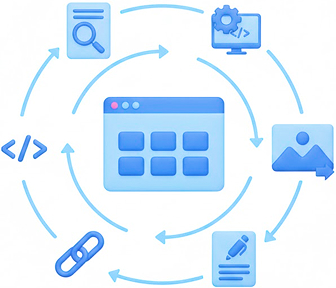
On-page SEO involves optimizing your title, meta description, URL, headings, media, keywords, and page-level technical factors of your website. You can control all On-page SEO factors on your website. It makes your website authentic and trustworthy. A properly done On-Page SEO improves engagement and visibility on search engines. It helps Google and readers to understand your content, its type, and purpose. Without On-page SEO, you can never rank your high-quality content on search engines.

Not Sure If Your Pages Are Properly Optimized?
Top 10 Factors for Effective On-Page SEO in 2026
In 2026, only SEO can rank your website well on search engines. On-page SEO is more likely in your control than Off-page SEO, which depends on external factors such as backlinks. You must consider the following top 10 essential On-page factors to make your page fully optimized for search engines.
1. Meta title and description
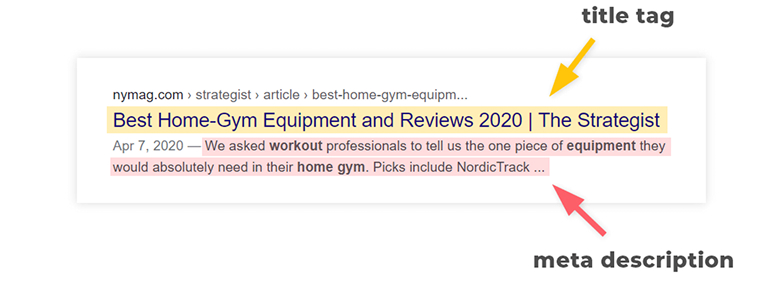
Meta title and description influence the CTR(click-through rate) of your website. The title should be written clearly without keyword stuffing, and meta descriptions should address what your content is about. They increase engagement by giving readers an idea of what they will learn from your content. Meta title and description are the first things users see while searching and decide whether to click on your page or not.
2. Structured Headings (H1, H2, H3)
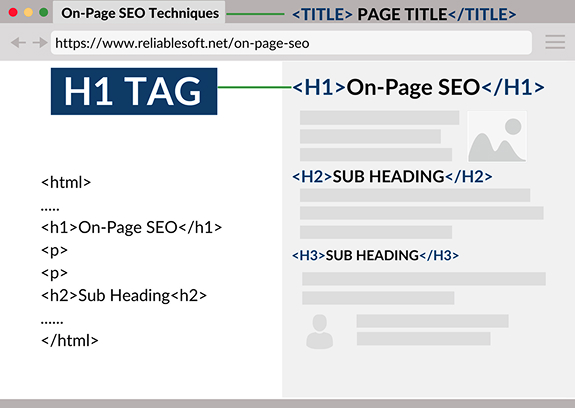
Structured headings give your content an organized structure. It boosts engagement by helping readers understand your topic in an overview. H1 is the main heading; it should be clear and should have the primary keyword. H2 headings are the sections explaining your main topic, while H3 headings are the further subdivisions of each section. It also makes it easy for readers to navigate your page, reduces bounce rates, and improves dwell time.
3. Satisfy user intent
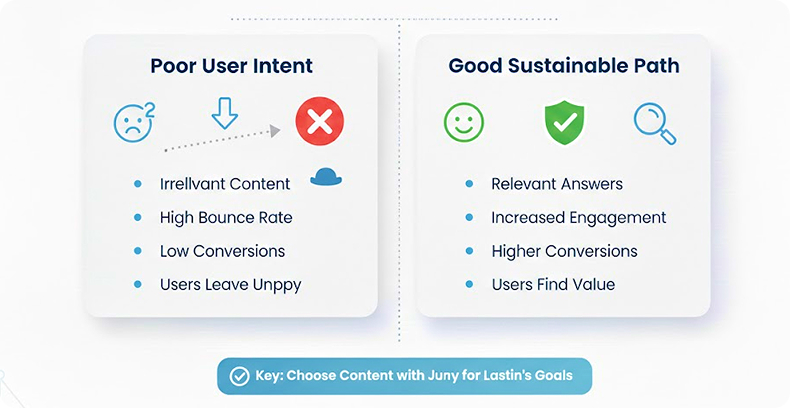
Your content should answer all the user problems. Users stay longer on websites that are authentic, relevant, and original. Google cares about content that fulfills user intent. When your content is reader-friendly, discusses relevant problems, and gives a trusted solution, users will engage more. This helps your website rank better on search engines. In 2026, satisfying user intent is the most important factor of ON-page SEO that decides the position of your page on Google.
4. Keywords
In 2026, Google values keyword placement more than keyword density. You should use keywords naturally in your content, and avoid over-stuffing. Over-stuffing can harm the ranking and the natural tone of your content. Instead, use secondary keywords and related terms to convey your idea without affecting SEO rules.
5. Internal Linking
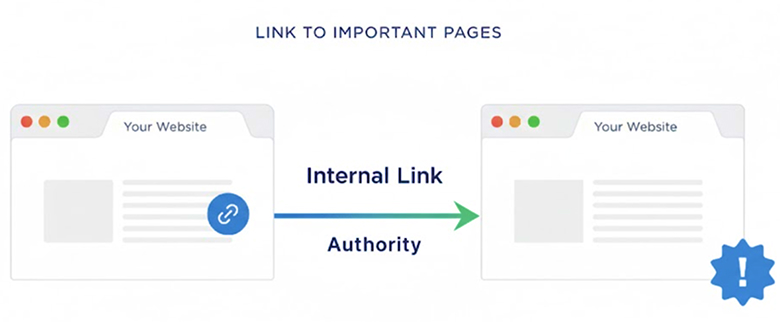
Internal linking plays an important role in ranking your website on search engine results. You can connect one page of your website with another through internal linking. These links guide users and keep them engaged for a long time. In 2026, internal linking is an important factor of on-page SEO, as it builds trust with users and search engines on your website. Proper internal linking provides all the necessary information related to a query and increases the chances that users may explore more of your content pages.
6. Media Optimization
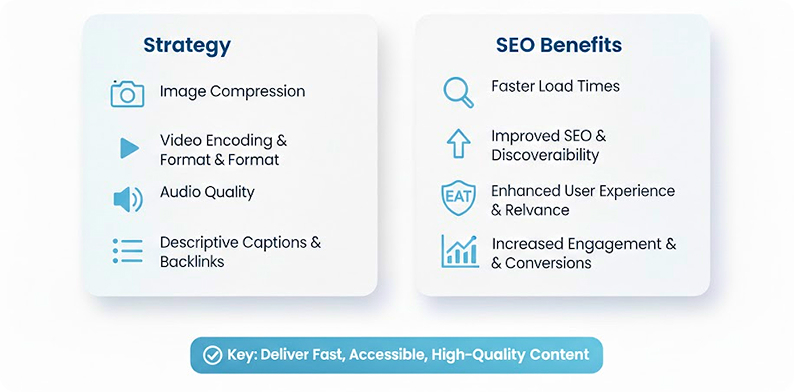
Through media optimization, you can make videos, images, and infographics that are used in your content more engaging and user-friendly. Images or videos that you add to your webpage greatly affect the loading speed. You should use a proper format for each image. Through proper media optimization, you can improve your content and the performance of your website on search engines.
7. Structured Data and Schema Markup
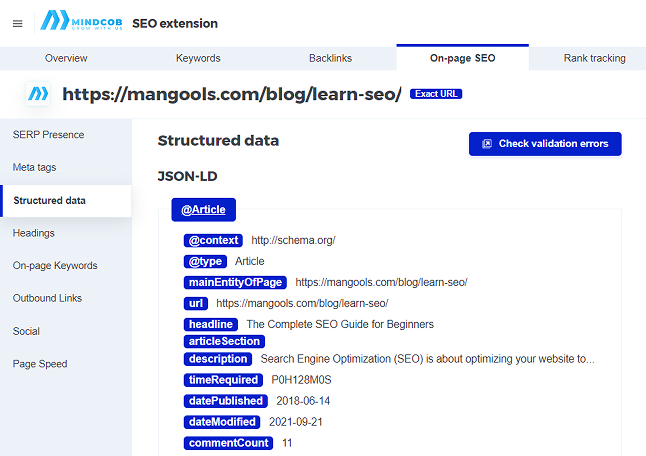
Structured data means writing your content in a proper format, such as JSON-LD schema. When you properly structure your content, search engines can easily analyse your content. Google then ranks it in front of the relevant audience in FAQs and other search sections. You can use reliable tools to check the structural mistakes of your page.
8. URLs
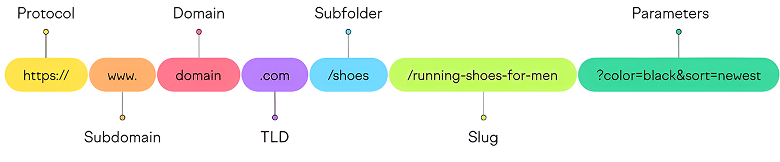
URL is the address of your website. You should SEO-optimize it by adding your primary keyword to it. You can write the URL of your website as: www.website.com/ keyword. Avoid adding unnecessary parameters, such as numbers and symbols in the URL of your website. Through a proper SEO-optimized URL, you can rank your website on search engines.
9. Page Load Speed and Core Web Vitals
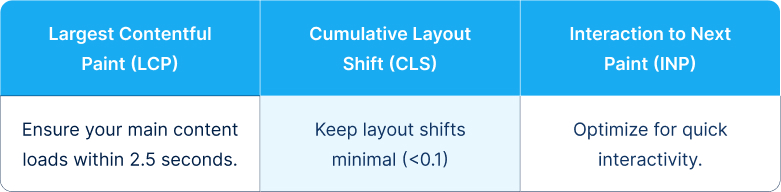
In 2026, page load speed and Core Web Vitals are the ranking factors on search engines. Core Web Vitals involves the technical performance of your website. Slow loading speed negatively affects user experience. You can use tools such as PageSpeed Insights to measure these technical parameters of your web page. I have discussed the key Core Web Vitals in the following table.
10. Mobile-friendly
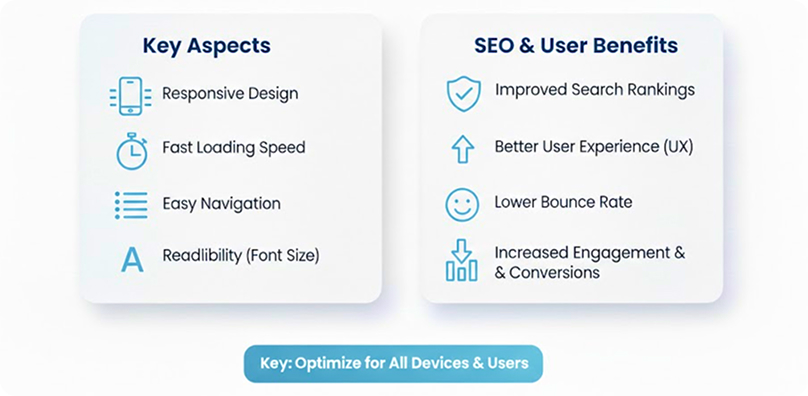
While ranking websites, Google prioritizes mobile-friendly websites. Your ranking on search engines can drop if the mobile version of your website is not user-friendly. Use readable fonts, and optimize the interface of your website for mobile phone screens. To identify your website’s improvement areas, you can use Google’s Mobile-Friendly Test.
Ready to Fully Optimize Your Website for 2026?
Get a customized on-page SEO strategy tailored to your site, goals, and competition.
Conclusion
On-page SEO is essential for search engine ranking in 2026. It involves all the factors that you can control on your website to optimize it for Google. A structured content with SEO optimized meta title, description and URL ranks well on search engines. Keywords must be naturally written in your content. Google ranks content that fulfills user intent. Loading speed, technical website factors, and a mobile-optimized interface are also crucial for better ranking of a website. Professionals like MindCob have an expert team that helps people make their websites SEO optimized within their budget.
Frequently Asked Questions
In 2026, SEO focuses on content quality and user intent rather than keyword stuffing. For a better ranking on Google, you must optimize every factor of your website for search engines, such as content quality, its structure, headings, URL, and technical factors. People trust content that is authentic and original. To rank on a search engine, you must follow SEO rules and fulfill user intent.
The most important factor for on-page SEO is satisfying user intent. If your content is well structured and SEO optimized, but it does not fulfill user requirements. Google will never rank such content. You have to address user problems, give their solutions, and write authentic content to win readers’ trust. Authentic and trustworthy content ranks faster on search engines.
There are four main types of SEO. On-page (directly linked with your website), off-page (includes backlinks and external signals), and technical SEO (Involves indexing, speed, and other factors), and local SEO (optimized website for local searches)