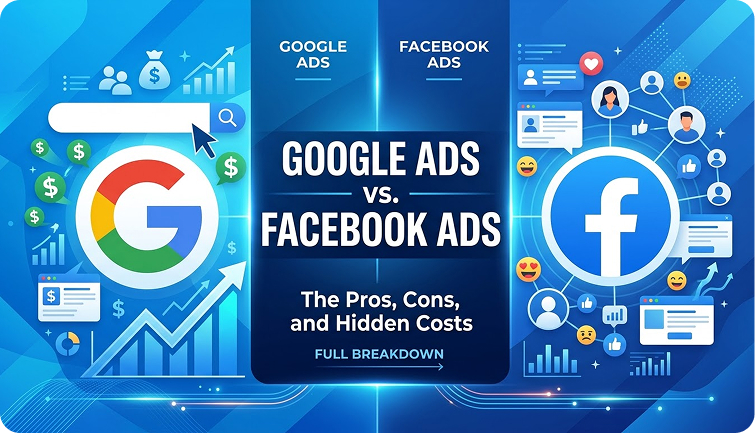
In 2026, Google Ads targets people who are already looking for something. They’re typing their queries into the search bar and are ready to buy. Facebook Ads, on the other hand, try to spark interest before people even know they need something. It’s more about showing people what they didn’t know they wanted. If you’ve ever tried running ads, you know it’s not just about clicks. It’s about spending wisely, reaching the right people, and figuring out the hidden costs. In this blog, you will learn how Google Ads and Facebook Ads work, their pros and cons, hidden costs, and how to choose the right one for your business.
What Are Google Ads?
Google Ads is like having a little sign appear right when someone is looking for what you offer. Say you run a plumbing business. Someone types “emergency plumber near me” into Google. Your ad can show up at just the right time. These people aren’t just browsing. They want something now. These Ads have high purchase intent.
You can also reach people with Google, YouTube, or even Gmail ads. You have to know keywords, understand bids, and check things all the time. A small business owner can save a hundred dollars on a campaign by using Google Ad Services or hiring a Google Ads consultant. They are the experts who know the right keywords and strategies that make your Ads worth converting.

Need Help Managing Google Ads?
Our Google Ads experts find profitable keywords, reduce wasted spend, and turn searches into real customers.
What are Facebook Ads?
Facebook Ads is like showing someone a cool gadget while they’re scrolling through their feed. They weren’t looking for it, but the ad gets them thinking. This is perfect for brand awareness. Maybe you sell colorful mugs or custom T-shirts. Seeing a nice photo in a story or a reel can spark interest.
Facebook lets you target people based on age, interests, habits, or even audiences similar to your best customers. It’s creative, visual, and sometimes fun. But people aren’t always ready to buy. They’re just scrolling. That’s why campaigns can take longer to turn into sales, and why a Facebook ads service or Facebook ad management can save time and stress.
Google Ads vs. Facebook Ads
Search vs. Discovery Intent
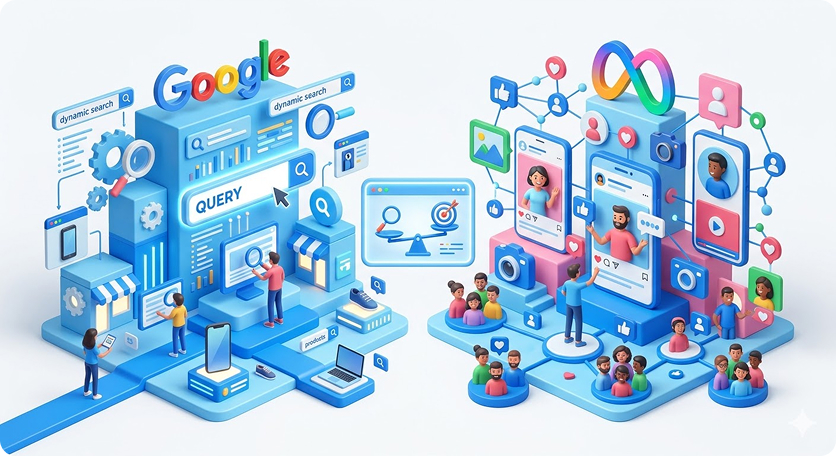
Google Ads catches people searching for something specific. Facebook Ads tries to get people to notice something they weren’t looking for. There’s a difference between hunting and window-shopping.
Targeting Method
Google is all about keywords and context. Facebook digs into demographics, hobbies, and behaviors. You can even target look a like audiences, which is beneficial if you already know who your best customers are.
Audience Engagement Stage
With Google, people are usually at the “I want it now” stage. With Facebook, they might just be curious. You can spark interest in your audience about your product through attractive reels and content.
Intent Accuracy
Google Ads delivers a more exact intent. Facebook Ads is more guesswork. Through proper research and expert help, you can reach your target audience.
Ad Placement Options
Google’s ads can show in Search, Display, YouTube, or Gmail. Facebook ads appear in the feed, Stories, Instagram, Messenger, or the Audience Network.
Visual vs. Text Focus
Google Ads are mostly text, unless you use display banners. Facebook Ads are all about visuals, photos, videos, carousels, and Reels.
Reach Dynamics
Google reaches people who are actively looking and has over 8.5 billion searches a day. Facebook reaches people casually browsing, which can be very precise if you target well.
Types of Ads on Google
Google has many kinds of ads, and each type works a little differently. Google Ad Services helps you select the right type of ad based on your business type and goals. The following are the types of Google Ads:
Search Ads
Search Ads show up when someone types something in Google. For example, if someone writes “blue denim jacket,” your ad can appear on top. People see it when they already want something. It can help small shops get more buyers quickly.
Display Ads
Display Ads are pictures or banners that show on other websites. A small clothing store can use them to show its brand while people are reading or watching other things. People may not click right away, but they see your name and product.
Shopping Ads
Shopping Ads show your product picture, price, and store in search results. If someone searches for a “blue denim jacket,” they can see your jacket with the price. It helps online stores get more buyers.
Video Ads
Video Ads appear on YouTube. You can show a short clip about your product or how to use it. People watch it and sometimes remember it later or click to buy.
App Ads
Google’s ads can show in Search, Display, YouTube, or Gmail. Facebook ads appear in the feed, Stories, Instagram, Messenger, or the Audience Network.
Types of Facebook Ads
Facebook has different kinds of ads, too. Each type shows your product in a different way. The following are some types of Facebook ads:
Image Ads
Image ads have one picture that is clear, simple, and easy to understand. People see it while scrolling. Works well for small shops or simple messages.
Video Ads
Video ads show your product or service in action. For example, a café made a short video of making coffee. People stopped scrolling, and some visited the café the same day.
Carousel Ads
Carousel ads let you show many pictures in one post. People can swipe to see all the pictures. It is good if you have more than one product or feature.
Collection Ads
Collection Ads show pictures and videos together. It looks like a small catalog. Works well for online shops with many items.
Reels Ads
Reels ads are short vertical videos. They grab attention fast. People watch them while scrolling Instagram or Facebook.
Pros and Cons of Google Ads
- Pros
High Purchase Intent
Google Ads shows your message to people who are ready to buy. If someone types in “best local plumber,” and your ad pops up, there’s a good chance they’ll call you right away.
Massive Reach
Over 8.5 billion searches a day, and nearly everyone online sees some part of Google in a day. So, there are many potential eyes on your business.
Immediate Results
If your goal is fast leads or urgent services, Google Ads gives immediate results. Unlike social ads, you don’t have to wait for someone to scroll past a post.
- Cons
Higher Costs
Because it works so well, competition is high. Keywords for finance, IT, law, or emergency services can get very competitive. Small businesses sometimes find CPC higher than they expected.
Complexity
You need to manage keywords, match types, bid strategies, and ongoing optimization. A few wrong moves can waste money.
Limited Visuals
Text-based ads don’t always work for brands that rely on visual appeal. Display ads can help, but they’re different from scrolling through a Facebook feed full of images.
Stop Overpaying for Google Ads Clicks
Our specialists optimize bids, keywords, and targeting to reduce costs and increase conversions.
Pros and Cons of Facebook Ads
- Pros
Granular Targeting
You can aim at very specific groups. Age, interests, hobbies, job types, and lookalike audiences are all options. It’s easy to reach the right eyes.
Cost-Effective
Usually, Facebook’s cost per click is lower than Google’s. For campaigns focused on awareness or smaller budgets, it’s attractive.
Creative Freedom
You can use photos, videos, carousels, and Reels. If your product is visual, this is where it shines. People like to stop and watch.
- Cons
Lower Intent
People are scrolling for fun, not shopping. Even if they like your ad, conversions may take longer.
Ad Fatigue
Users get bored if they see the same ad too often. You’ll need fresh content regularly.
Privacy Constraints
Tracking can be tricky with iOS updates and cookie restrictions. It’s harder to measure exactly how well your ads are doing.
Cost of Facebook ads and Google ads in 2026
The following table shows the 2026 cost of Facebook ads and Google ads.
| Metric | Facebook Ads | Google Ads |
|---|---|---|
| CPC | $0.50 – $2.00 | $1.50 – $6.00+ |
| Conversion Rate | 0.9% – 10% | 3.75% – 7.52% |
| CPL | $27.66 | $70.11 |
Although the Facebook ads are cheaper than Google Ads, they take more time to give you leads. Google Ads give fast results as they target people who are already looking for your services.
Hidden Costs for Google and Facebook Ads
Advertising isn’t just clicks. There are hidden costs you might not think about. Creative content production can cost you more than expected, especially for Facebook. Videos and photos take time or money. Google Ads can have click fraud, bots clicking your ads, wasting your budget. Sometimes Google’s automated bids overshoot, especially for branded keywords. And most small businesses need help managing it all. Hiring a Google Ads consultant or using Facebook ad management can make life easier, but it costs extra.
Conclusion
The choice between Google Ads and Facebook Ads depends on your business goals, budget, and expertise. Both have their own pros and cons. Google Ads targets people who are already looking for related services or products, while Facebook Ads first raise awareness, and then you can get clicks. Both result in money loss if they cannot handled carefully. In Canada, people hire a Google Ads consultant or use Facebook Ads services, such as Mindcob, a digital marketing agency, which helps people to run Google and Facebook Ads in a meaningful way with less wastage of money.
Ready to Turn Ads Into Real Leads?
Let our certified ad specialists manage your Google and Facebook campaigns while you focus on growing your business.
Frequently Asked Questions
Google Ads shows your ad to people who are already searching for something. They want it now. Facebook Ads show your ad to people who are scrolling or just looking around. They might like it, but they weren’t searching for it. Google catches buyers. Facebook helps people notice your brand.
Google Ads usually costs more per click, around $1.50 to $6.00. Facebook Ads are cheaper, about $0.50 to $2.00 per click. Google leads are often ready to buy. Facebook leads are cheaper but may need to see your ad many times before they buy.
It depends on your goals and budget. Google Ads is good if people are searching to buy now. Facebook Ads are good if you want people to see your brand first and maybe buy later. Many small businesses try a little of both, see what works, and spend money where it works best.