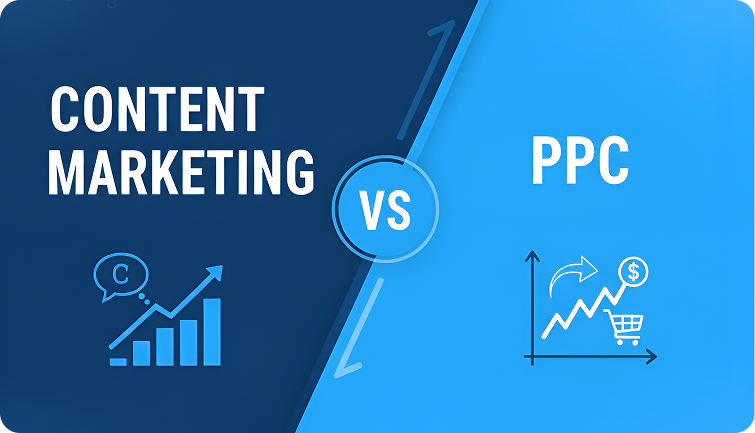
Content Marketing or PPC: Which one is better for your ranking? Many Canadian businesses face the same problem when planning marketing work. Some options show results very fast, while others take time but last longer. Content marketing and PPC advertising are often compared for this reason. Both are common across Canada, but they work in very different ways. The revenue also changes depending on time, industry, and how buyers usually make decisions. In this blog, you will learn how each method works in real situations and how it helps businesses to rank online.
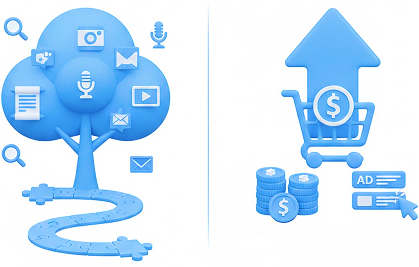

Not Sure Which Strategy Fits Your Business?
Get a personalized recommendation based on your industry, budget, and goals.
What Is Content Marketing
Content marketing usually shows up in everyday business activity. A company writes articles, explains services, or answers common questions people search online. Over time, this content starts showing up in search results. Visitors come in without paying for each click.
For many Canadian businesses, this type of marketing works well because buyers often take time before choosing. Legal services, financial companies, consultants, and local providers all depend on trust. People read, compare, and come back more than once. Content stays available during this process and keeps the business visible.
The return from content marketing does not come quickly. Money is spent first on writing and publishing. Traffic and leads often appear months later. At first, results may not be clear, and progress can seem slow, though the effect becomes stronger after some time.

What Is PPC (Pay-Per-Click)?
Pay-Per-Click (PPC) advertisements work faster. A business pays to show ads on search engines or social platforms. Each click costs money. In Canada, Google Ads is widely used for search, while social ads are common for visibility and reminders.
This method is often chosen when results are needed quickly. New businesses, short offers, or seasonal services usually depend on paid ads. PPC allows a company to appear in front of people right away, even without a strong online presence.
The return from PPC can be seen very soon. Spending and results are easy to track. When ads are running, traffic comes in. When ads stop, traffic usually stops too. PPC brings traffic fast, yet results can shift from week to week.
Which Gives Better ROI for Canadian Businesses
ROI is used to see if marketing spending brings any return. It is the difference between money earned and money spent. The idea is simple, but results do not appear the same way for every type of marketing.
ROI Tracking in Content Marketing
In content marketing, ROI is usually not visible at the start. Costs appear first through writing and publishing. The content then stays online and begins to bring visitors over time. Tracking looks at where visitors come from and what they do after reaching the page. This can include page visits, form fills, calls, or enquiries linked to that content. These results are then compared with the cost of creating the content.
For example, a service page may receive only a few visits at first. Months later, the same page may bring regular enquiries. ROI is measured by looking at how many enquiries come from that page compared to the money spent.
ROI Tracking in PPC Digital Marketing
In PPC advertising, ROI is measured while ads are active. Each click has a clear cost, which makes spending easier to track. Visits and leads can usually be linked directly to the ads. Tracking compares ad spend with the results during the same time period. If an ad runs for a week and brings several leads, ROI is based on those leads and the total amount spent.
For example, an ad campaign may run for ten days and bring phone calls or form submissions. ROI is measured by comparing those results with the amount paid for clicks during that time. When ads stop, new results usually stop as well.
Content Marketing vs PPC
Looking at both strategies side by side helps explain the difference. In Canada, business conditions differ from place to place, so these differences often matter more than cost alone.
| Area | Content Marketing | PPC (Pay-Per-Click) |
|---|---|---|
| Speed of results | Results usually take time and do not appear right away | Results can be seen soon after ads start running |
| How money is spent | Money is paid early for writing and publishing content | Money is paid each time someone clicks the ad |
| Value over time | Content can keep bringing visitors for a long time | Traffic usually ends when ad spending ends |
| Control over cost | Costs stay more stable once the content is online | Costs can often change because of bidding and competition |
| Trust from users | People often trust content because it explains things | Ads are often skipped or ignored by some users |
| When it works best | Works well when people need information before choosing | Works well for short offers or quick attention |
| Fit for Canada | Matches local search and regional needs well | It can become costly in crowded Canadian markets |
| Ongoing work | Needs updates now and then, but not every day | Needs regular checks and spending control |
Ready to Choose the Right Strategy?
We’ll help you decide whether content marketing, PPC, or a mix will deliver better ROI.
Which Gives Better ROI for Canadian Businesses
Canadian businesses work in a mixed market. Some areas are highly competitive, while others rely on local visibility. The language people use, their location, and how they make choices also affect results. Content marketing works well in this environment because it can be shaped to fit local needs and expectations.
Information can be adjusted to reflect local rules, services, and concerns, which helps build familiarity over time. PPC is still useful, but budgets need care. National campaigns can become expensive quickly. Many Canadian businesses use paid ads in a controlled way rather than relying on them alone.
Can Canadian Businesses Use Content Marketing and PPC Together
In many cases, businesses use both methods together. Content builds trust and visibility. PPC helps during early stages or special seasons. One does not fully replace the other. Content can improve how paid traffic performs. PPC data can show which topics deserve more content. This mix often forms gradually instead of being planned in detail from the start.
The choice depends on available budget, market pressure, and what the business wants to achieve. Companies looking for steady progress often lean more toward content, while those needing quick attention tend to rely more on PPC as content develops.
Conclusion
Content marketing and PPC are both used by Canadian businesses, but they work in different ways. Content marketing usually takes time because pages need to be written and slowly found by people searching online, and these pages can keep bringing visitors later on without daily costs. PPC brings traffic faster, but it lasts only while the ads are running. What works better depends on timing, the budget available, and how customers usually make their choice. Mindcob, a professional Digital Marketing agency in Canada, helps businesses to get better ROI from Content marketing and PPC.
Stop Guessing. Start Growing.
Let Mindcob build a results-driven strategy combining content and PPC for better ROI.
Frequently Asked Questions
Small businesses can use PPC for short periods, mainly when fast visibility is needed. It suits short campaigns or limited offers. Over time, using only PPC can become difficult since costs continue while ads are active.
Content marketing usually takes several months to show clear results. Pages need time to be indexed and found by search engines. Traffic often grows slowly at first and becomes more steady later, depending on competition and topic demand.
PPC results usually slow or stop when ads are paused. Traffic depends on paid clicks, so new visits often end when spending stops. Past data can still be reviewed, but new leads usually require active ads.
Yes, they can count. Even if a mention has no link, it may show search engines that your brand exists. But spelling, consistency, and context matter. Wrong info may reduce the effect.
Not really. Off-page SEO is ongoing work. Links, mentions, and reviews may change. Trends and search rules change. Doing it once may help a little, but steady work with publishing and relationships gives better long-term results.